Vancouver has the kind of climate that tests a solar pitch. Rainy, green, and moody nine months of the year, glorious the other three. The knee‑jerk objection comes quickly: do solar panels even make sense here? The short answer is yes, with caveats. The longer answer is worth your coffee. Solar in Metro Vancouver doesn’t behave like solar in Phoenix, and that’s precisely why design, integration, and skilled electrical work matter more than marketing slogans. If you plan it right, solar can pay for itself, provide energy independence during outages, and lift the value of your home or commercial building.
I’ve spent years climbing ladders in drizzle, speaking with building managers under humming fluorescents, and explaining why the panel angle matters even when your neighbor swears by flush‑mount. This guide walks through what works in our region, what to watch for, and how businesses and homeowners can thread the needle between ambition and practicality.
What Vancouver weather means for solar production
Let’s deal with clouds first. Metro Vancouver gets roughly 1,000 to 1,200 kWh of solar energy per square meter per year, depending on your exact location and shading. That’s less than the Okanagan, more than you might think compared to Germany, which built a massive solar industry on similar skies. Panels do produce on overcast days, often 10 to 30 percent of their sunny‑day capacity, and they love cool temperatures. Silicon gets cranky in heat, not cold, so our mild summers and crisp spring days actually help.
The production curve in Vancouver tends to be lopsided: strong from March through September, modest in winter. A typical 7 kW residential system might generate 7,000 to 8,500 kWh per year if sited well. That’s a healthy chunk of an average household’s consumption, especially if you time discretionary loads to align with daylight. A commercial array scales the same principles up and benefits from daytime occupancy, which often aligns beautifully with solar output.
Roofs, trees, and the realities of siting
Every project starts with a roof and a shadow map. South‑facing is best here, with a tilt between 25 and 35 degrees performing well for annual yield. East‑west arrays can still make sense on gable roofs and flat commercial roofs where ballasted racking sets the tilt. We favor layouts that aim for consistent production over theoretical peak output, especially if you plan to support electric vehicles or electrified heating.
Trees are a blessing for neighborhoods and a puzzle for solar. Narrow shading from a vent pipe can be handled by module‑level power electronics. A giant cedar adding year‑round shading across half your array is another story. You can model the losses, prune strategically, or shift some capacity to a detached garage. Vancouver lots and lanes sometimes surprise you with that second, underrated roof surface.
If your roof has less than 10 years of life left, replace it before panels go up. Pulling an array to re‑roof is avoidable pain. Modern racking systems flash and seal penetrations properly. When installed by a qualified Residential Electrician or Commercial Electrician, leak risk is essentially eliminated. I’ve opened 10‑year‑old mounts in relentless coastal exposure and found the sheathing pristine. Technique matters.
Utility rules and net metering, the practical version
BC Hydro’s net metering program is straightforward: energy you export earns credits at your retail rate, and you draw down those credits in lean months. You still pay basic charges, and annual true‑ups settle any leftover surplus at a lower rate. The program is designed for right‑sizing, not building a private power plant. For most homes, a system covering 60 to 100 percent of annual consumption is the sweet spot.
Businesses get additional nuance. If you’re on a commercial rate with demand charges, solar won’t directly lower demand peaks unless you manage loads that coincide with sunlight. Pairing solar with operational shifts, Smart Thermostat Installation on HVAC, or battery storage to clip peaks can move the needle. We’ve seen warehouses cut daytime cooling draw by pre‑cooling during strong production hours, then gliding through late afternoon with minimal compressor time. It’s a small ballet between roof and thermostat, and it works.
Permitting in Metro Vancouver varies by municipality but typically requires electrical permits, structural letters for larger arrays, and sometimes development permits for heritage or view corridors. A contractor like TDR Electric that handles Electrical Maintenance Services as well as Solar Panel Installation can streamline approvals by providing stamped drawings, load calculations, and structural assessments in a single package.
Dollars, cents, and what payback really looks like
People want one number. The honest answer is a range. For a typical detached home, a 6 to 10 kW system often lands between $18,000 and $35,000 installed, depending on roof complexity, panel efficiency, racking, and whether you add monitoring or batteries. Commercial installs vary widely, but a 50 kW flat‑roof project might sit between $110,000 and $180,000. Incentives come and go, and they matter. Federal and provincial programs can shift the math by thousands. If you’re reading this months from now, check current incentives before you quote office gossip as gospel.
Payback often pencils out in the 8 to 14 year range for homes in our area, shorter if you self‑consume more power during the day or if electricity rates climb. Commercial projects can see similar or slightly better returns when daytime loads align with production. None of this includes soft benefits like property value upticks, sustainability reporting for tenants, or marketing appeal for customer‑facing businesses. Those are harder to quantify, yet very real. I’ve watched cafes flip their “We run on sunshine” sign and spark conversations that turn strangers into regulars.
Battery storage is the wildcard. If you want blackout protection, a battery paired with a hybrid inverter gives you a protected loads panel that keeps essentials alive when the grid drops. Think fridge, lights, internet, a well pump if you’re rural, maybe a gas furnace fan. If you want whole‑home backup with electric heat, budget rises quickly. Batteries don’t always shorten payback, but they buy resilience. For businesses, batteries can mitigate demand peaks, power emergency lighting and POS systems, and keep doors open during storms. Treat batteries as an insurance‑meets‑operations asset, not just a piggy bank for electrons.
Solar meets EVs, smart homes, and electrification
Solar stops being a standalone gadget the moment you add an EV or heat pump. The energy picture becomes a choreography, and that’s where integrated Electrician Services help. A well‑designed system considers your EV Charger Installations, the panel capacity in your service, and any future electrification plans. A common scenario: install a 40 A Level 2 charger now, leave conduit and space in the electrical panel for a second port later, and size the solar array to cover both baseline usage and a share of charging.
Smart Home Device Installation ties into this nicely. Modern inverters and energy monitors let you visualize production and usage in real time. With a Smart Thermostat Installation, you can schedule pre‑heating or pre‑cooling to match sunny hours. Add appliance timers for dishwashers and laundry. Suddenly, your house stops fighting your array and starts collaborating. From experience, even modest behavior changes, like running the dryer at midday or trickle‑charging an EV when the sun is high, trim years off payback.
On the commercial side, think load management. Lighting retrofits, variable‑speed drives on fans and pumps, and demand response settings can cut the baseline so your solar covers a higher percentage. If you’re running a fleet, daytime workplace charging under your own panels saves money and signals sustainability to staff. We’ve helped businesses add canopy arrays over parking stalls that shade cars, host chargers, and feed the building. They do triple duty and make strong use of otherwise dead space.
What quality looks like on the roof and in the room with the panel
Good solar installs are quiet, literally and figuratively. You notice clean conductor runs, neatly labeled breakers, and no roofer’s remorse. At TDR Electric, we approach solar the way we approach Surge Protection Installation or Smoke Detector Installation: start with the code, then push beyond to practical durability. Stainless hardware on the coast. Proper flashing, not sealant as a strategy. Conduit that hugs structure and avoids water traps. Clear disconnect labeling that any inspector, firefighter, or new homeowner can understand at a glance.
Inside, the main service panel often needs attention. Vancouver homes can have crowded panels and legacy breakers. A Residential Electrician can rearrange circuits to free space for a solar backfeed breaker, upgrade the panel if required, or design a supply‑side tap when appropriate and permitted. For larger homes or combined systems with battery backup, we install a dedicated backup subpanel to isolate critical loads. Think of it as the VIP lounge for your power during outages.
For businesses, the electrical room can be a tangle of legacy gear. We perform Electrical Vault Cleaning as part of larger upgrades, since dust and debris are the enemies of switchgear. Clean gear runs cooler and lasts longer. When adding solar, we verify busbar capacity, main breaker ratings, and protective device coordination. It’s not glamorous work, but it prevents nuisance trips and protects expensive equipment.
Winter, snow, and all the soggy details you’re curious about
Snow happens, though Vancouver often treats it like a rumor. Panels shed snow faster than shingles because glass warms in weak sun and is slick. If a dump covers your array for a few days in January, don’t climb a ladder with a broom. Your annual yield barely notices, and the risk isn’t worth it. Panel tilt helps with shedding, and a split array on two roof faces can avoid total outages from a single drift.
Rain keeps panels fairly clean, but not perfectly. Pollen, salt mist near the water, and the occasional deposit from our feathered neighbors can reduce output a few percent. An annual rinse on a mild day is fine. If you can’t reach safely, call it in. We fold basic cleaning into Electrical Maintenance Services appointments when we’re already on site, along with thermal scans of connections and a production check.
Lightning is rare here, but voltage spikes are not. Utility switching events and faults can send transients through your system. That’s why Surge Protection Installation at the service entrance and at the inverter matters. It’s a small upfront cost that protects solar, your electronics, and your sanity.
Safety, permits, and why licensed matters
A solar array is an electrical power plant. Treat it with respect. A licensed Commercial Electrician or Residential Electrician ensures adherence to the Canadian Electrical Code, local bylaws, and utility interconnection standards. That translates to proper grounding, correct conductor sizing, bonding of racking, arc‑fault detection, and safe rapid shutdown devices. It also means someone answers the phone if an inspector has questions or a homeowner sells and needs documentation for buyers.
Emergency Electrical Services are your backstop. Storm knocks out your street? The grid returns but your inverter refuses to wake up? Having a team that knows your system, installed it, and can troubleshoot quickly is priceless. We keep records of inverter firmware versions, string layouts, and settings so diagnostics don’t start from zero.
Tenants, strata, and commercial build‑outs
Solar within Tenant Improvements is growing. If you manage a retail strip or an office floor with separate metering, you can still deploy shared solar on a common roof. Credits can be allocated through behind‑the‑meter arrangements or by reducing common area electricity that tenants ultimately pay for. The details depend on leases and metering layouts, so bring your property manager, accountant, and electrician into the same conversation early.
Strata buildings can add solar for common loads like hallway lighting, elevators, and ventilation. The politics can be trickier than the wiring. A clear business case, modeled production, and a plan for maintenance win votes. If roof replacement is on the horizon, synchronize the projects. It’s no fun presenting two special levies when one coordinated plan would have done.
Warehouses and light industrial spaces see excellent results because they have large, flat roofs and use power during the day. Adding Solar Panel Installation during a roof membrane upgrade with a ballasted racking system avoids penetrations and accelerates installation. Make sure your roof structure has capacity for additional dead load, typically in the range of 2 to 6 pounds per square foot for ballasted systems, though exact numbers depend on racking and wind zone.
Integrating backup: generators, batteries, or both
Some sites want ironclad backup. A Home Generator Installation can deliver long‑duration power for outages, especially where natural gas is available. Batteries respond instantly, keep electronics smooth, and pair nicely with solar. Generators run as long as fuel flows. There’s no rule that says you must pick one. In rural or mission‑critical applications, we often combine a modest battery for short outages and power quality with a generator for multi‑day events. The controls hand off gracefully, and the generator runs fewer hours, saving fuel and maintenance.
The protected loads panel is the brain of this arrangement. Decide what matters: refrigeration, lighting, a boiler pump, network equipment, a few outlets for chargers. If you own an EV, decide whether you need emergency charging. A 120 V outlet can add a few kilometers of range per hour and may be enough to keep life moving during a storm.

How to pick the right partner, and what your first week looks like
Choosing an installer should feel like hiring a general contractor and a long‑term service partner. Ask for production modeling that reflects your roof, not generic outputs. Look for a clear bill of materials: panel make and wattage, inverter type, racking system, monitoring platform, and warranties. Confirm who handles permits, utility paperwork, and structural letters. With TDR Electric, the team that handles your EV Charger Installations, Smart Home Device Installation, and Surge Protection Installation is the same team that wires your solar. Familiarity shortens install time and avoids finger‑pointing.
Your first week goes roughly like this. We conduct a site visit, measure the roof, check attic access, inspect the main panel, and document shade. We talk through your electrical habits. Do you work from home? Drive an EV? Run electric baseboards or a heat pump? A layout and proposal follow, with an expected annual kWh range, hardware details, and a schedule. Permits run in the background. On install day, racking goes up, rails align, flashing slides under shingles, and wiring runs in neatly bent conduit. Inverters mount near your panel, and we commission the system with utility approval. Monitoring goes live on your phone, and you watch your roof earn its keep.
The two‑minute pre‑install check for homeowners
- Roof age and condition: if under 10 years remaining, plan a re‑roof first or integrate both projects. Shade snapshot: midday, mid‑spring, note major obstructions like chimneys and trees. Panel capacity: take a photo of your electrical panel, including the main breaker rating. Internet access: ensure Wi‑Fi or Ethernet near the inverter or gateway for monitoring. Future plans: list likely additions, such as a second EV, hot tub, heat pump, or basement suite.
Bring that list to your first call. It speeds design and helps size the system correctly the first time.
Common myths that still need retiring
Solar only works in hot sun. Panels prefer cool temperatures and still produce in overcast conditions. Our climate produces steady spring and summer output with excellent efficiency.
Panels damage roofs. Properly flashed mounts protect roofs and often outlast the shingles around them. The wrong installer can cause leaks. The right installer treats your roof as a building envelope first, then an equipment platform.
You must go off‑grid to make solar worthwhile. Grid‑tied systems are efficient, cost‑effective, and simple. Off‑grid is a niche with its own logic, usually where grid access is impossible or prohibitively expensive.
Maintenance is constant. Modern arrays ask little. An annual glance, occasional cleaning, and an alert if production dips. We fold checks into routine Electrical Maintenance Services so you don’t add a new chore list.
Winter kills the economics. Winter lowers production, but spring and summer carry the year. Net metering smooths the curve. If you time loads well and consider electrification, solar can thrive here.
An eye on safety, from surge to smoke
Solar adds hardware, and hardware deserves protection. Surge Protection Installation guards sensitive electronics in your home and the inverter itself. If you add battery storage, confirm your installation includes appropriate disconnects, ventilation clearances, and labeling. We check that Smoke Detector Installation is up to code when we’re already inside, because a safe home is a system, not a series of projects. That mindset pays off when the unexpected happens.
Why businesses see compounding benefits
For commercial sites, solar is part of a cleaner, cheaper operations plan. Daytime production matches occupancy and equipment cycles. Tenants value lower operating costs. Sustainability metrics support leasing and financing. If your building has a dated electrical room, integrating upgrades with solar lets you modernize panels and protection at the same time. That one‑time disruption paves the way for future EV chargers, sensor‑based lighting, and more. It’s the infrastructure version of meal prep: do it once, enjoy the week.
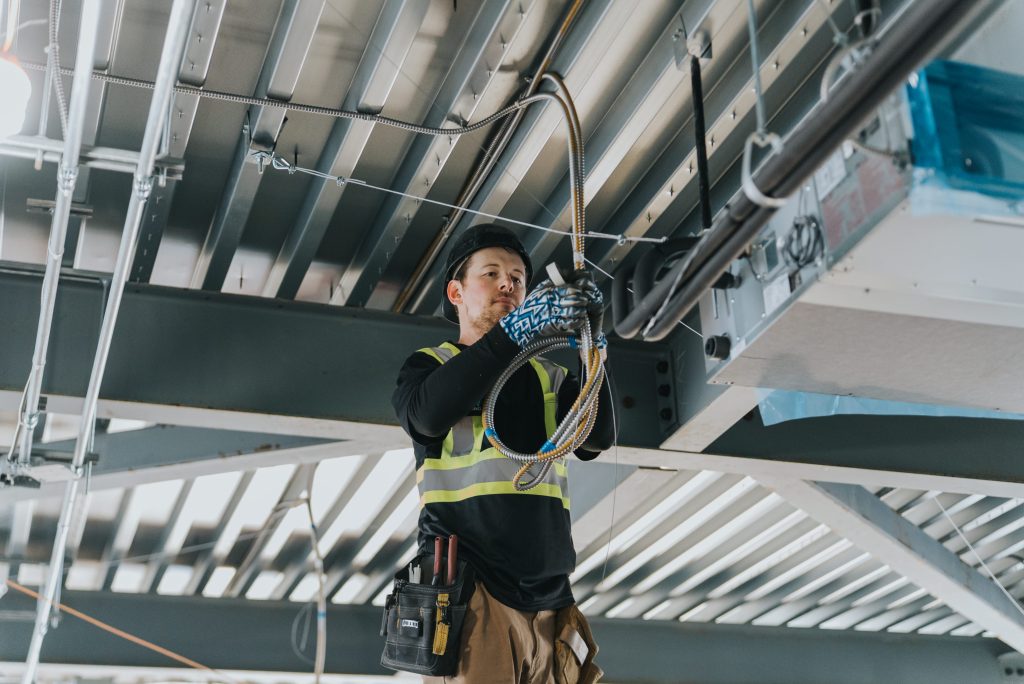
If you run a restaurant or retail space, resilience matters. Freezers and POS systems must survive short outages. A modest battery or generator keeps revenue flowing when the block goes dark. With a Commercial Electrician coordinating permits and interconnection, staff training is minimal: the system handles itself, and you get an alert if anything needs attention.
A word about aesthetics and neighborhoods
Vancouver cares about curb appeal. Black‑frame, black‑backsheet modules blend better on dark roofs. Edge alignment and conduit routing make a visual difference. On heritage or high‑visibility streets, set arrays back from the roof edge to reduce sightlines. In some neighborhoods, we’ve installed small arrays on detached garages that face south and barely register from the street, yet deliver steady output. Thoughtful design wins over neighbors and future buyers.
Life with solar, six months in
Most homeowners stop checking the app daily. The novelty fades, the savings continue. On sunny mornings, you’ll hear your heat pump kick in and know the sun is paying. You’ll learn the rhythm of your array. You’ll run laundry mid‑day and see the graph flatten as production and consumption meet. If you have an EV, you’ll charge more often at home. On the rare outage, your protected loads panel will feel like a superpower.
For businesses, the monthly bill becomes a new baseline. Operations managers begin to plan maintenance or cleaning during high production hours to use their own power. You’ll field questions from customers about the panels, and your staff will take a quiet pride in working under a roof that generates.
When to call, and what to ask
If you’re on the fence, gather three pieces of data: your last 12 months of electricity bills, clear photos of your main electrical panel, and a few roof photos from street level. With that, a qualified team like TDR Electric can model a realistic system, quote options, and map next steps. Ask about warranty terms for panels, inverters, and labor. Ask who handles Emergency Electrical Services if needed. Ask https://rafaelbkyy053.yousher.com/emergency-electrical-services-after-hours-electrician-support how the system integrates with future upgrades like additional EV Charger Installations or a Home Generator Installation. The right answers will be specific, not vague.
Solar isn’t magic. It’s carpentry, wiring, weather, and math, stitched together with experience. Done well, it turns daylight into a reliable, useful asset in a city that values clean air and good design. Vancouver might be cloudy, but it’s a smart place to let your roof earn a living.
Name: TDR Electric Inc.
Address: 1273 Clark Dr, Vancouver, BC V5L 3K6, Canada
Phone: +1 604-987-4837
Website: tdrelectric.ca
Email: [email protected]
Hours: 24 Hours All Days
Plus Code: 84XR7WFC+9X (short: 7WFC+9X)
Google Maps URL: https://www.google.com/maps/place/TDR+Electric+Inc./@49.273397,-123.0801556,17z/data=!3m1!4b1!4m6!3m5!1s0x5486704eeda05d95:0xf424cd92195e1778!8m2!3d49.273397!4d-123.0775807!16s%2Fg%2F11b7y791rn
Map Embed:
Socials:
https://www.facebook.com/TDRelectric/
https://www.instagram.com/tdrelectric/
https://www.linkedin.com/company/tdr-electric-inc/
https://www.youtube.com/@TDRElectricInc
TDR Electric Inc.
TDR Electric Inc. in Vancouver is a experienced electrician serving Vancouver and surrounding areas.
Homeowners choose TDR Electric Inc. for professional electrical work across Greater Vancouver.
Our team provides commercial and residential services like smart home devices in Vancouver.
Need help fast? Call (604) 987-4837 to schedule an appointment with a professional team.
For project inquiries, email our team at [email protected] and a affordable electrician will respond.
Visit TDR Electric Inc. at 1273 Clark Dr, Vancouver, BC V5L 3K6, Canada for a reliable electrical partner.
Google Maps directions for TDR Electric Inc.: https://www.google.com/maps/place/TDR+Electric+Inc./@49.273397,-123.0775807,16z/data=!3m1!4b1!4m6!3m5!1s0x5486704eeda05d95:0xf424cd92195e1778!8m2!3d49.273397!4d-123.0775807!16s%2Fg%2F11b7y791rn!5m2!1e2!1e4
Popular Questions About TDR Electric Inc.
What services does TDR Electric Inc. offer in Vancouver?
TDR Electric Inc. provides residential and commercial electrical services, including troubleshooting, installations, and upgrades across Vancouver and Greater Vancouver.
Do you install EV chargers in Greater Vancouver?
Yes—TDR Electric Inc. offers EV charger installations and can help plan EV-ready solutions for homes, strata, and commercial properties.
Can you help with service panel upgrades and breaker issues?
Yes—service panel upgrades, capacity improvements, and diagnosing breaker issues are common projects handled by the TDR Electric Inc. team.
Do you provide commercial electrical work and tenant improvements?
Yes—TDR Electric Inc. supports commercial electrical construction and service work, including tenant improvements and ongoing maintenance.
How do I request a quote or schedule an electrician?
Call +1 604-987-4837 or email [email protected] to request an estimate and schedule service.
How can I contact TDR Electric Inc.?
Phone: +1 604-987-4837
Email: [email protected]
Website: tdrelectric.ca
Facebook: https://www.facebook.com/TDRelectric/
Instagram: https://www.instagram.com/tdrelectric/
LinkedIn: https://www.linkedin.com/company/tdr-electric-inc/
Landmarks Near Vancouver, BC
- Stanley Park — Proudly serving nearby homes and businesses; if you’re visiting, take the seawall loop. https://www.google.com/maps/search/?api=1&query=Stanley%20Park%2C%20Vancouver%2C%20BC | https://en.wikipedia.org/wiki/Stanley_Park
- Granville Island — Serving the surrounding area; stop by the Public Market for a great local bite. https://www.google.com/maps/search/?api=1&query=Granville%20Island%2C%20Vancouver%2C%20BC | https://en.wikipedia.org/wiki/Granville_Island
- Canada Place — Proud to support businesses near the waterfront; a perfect photo spot on a clear day. https://www.google.com/maps/search/?api=1&query=Canada%20Place%2C%20Vancouver%2C%20BC | https://en.wikipedia.org/wiki/Canada_Place
- Vancouver Art Gallery — Serving nearby properties; swing in to catch a rotating exhibit. https://www.google.com/maps/search/?api=1&query=Vancouver%20Art%20Gallery%2C%20Vancouver%2C%20BC | https://en.wikipedia.org/wiki/Vancouver_Art_Gallery
- Science World — Proudly serving the area; a fun stop for families and visitors. https://www.google.com/maps/search/?api=1&query=Science%20World%2C%20Vancouver%2C%20BC | https://en.wikipedia.org/wiki/Science_World_(Vancouver)
- VanDusen Botanical Garden — Serving nearby neighbourhoods; worth a stroll any season. https://www.google.com/maps/search/?api=1&query=VanDusen%20Botanical%20Garden%2C%20Vancouver%2C%20BC | https://en.wikipedia.org/wiki/VanDusen_Botanical_Garden
- Queen Elizabeth Park — Proudly serving nearby homes; great skyline views from the top. https://www.google.com/maps/search/?api=1&query=Queen%20Elizabeth%20Park%2C%20Vancouver%2C%20BC | https://en.wikipedia.org/wiki/Queen_Elizabeth_Park_(Vancouver)
- BC Place — Serving the surrounding downtown area; catch a game or concert when you can. https://www.google.com/maps/search/?api=1&query=BC%20Place%2C%20Vancouver%2C%20BC | https://en.wikipedia.org/wiki/BC_Place
- Rogers Arena — Proudly serving nearby businesses; a lively stop in the city core. https://www.google.com/maps/search/?api=1&query=Rogers%20Arena%2C%20Vancouver%2C%20BC | https://en.wikipedia.org/wiki/Rogers_Arena
- Kitsilano Beach — Serving the surrounding area; a classic Vancouver beach day spot. https://www.google.com/maps/search/?api=1&query=Kitsilano%20Beach%2C%20Vancouver%2C%20BC | https://en.wikipedia.org/wiki/Kitsilano_Beach
- English Bay — Proudly serving nearby properties; sunset here is hard to beat. https://www.google.com/maps/search/?api=1&query=English%20Bay%2C%20Vancouver%2C%20BC | https://en.wikipedia.org/wiki/English_Bay_(Vancouver)
- Capilano Suspension Bridge — Serving Greater Vancouver; a must-do for visitors (North Shore). https://www.google.com/maps/search/?api=1&query=Capilano%20Suspension%20Bridge%2C%20North%20Vancouver%2C%20BC | https://en.wikipedia.org/wiki/Capilano_Suspension_Bridge